RayNeo’s eSIM AR Glasses Signal the Post-Smartphone Era
When a consumer AR brand raises money, it is usually framed as another vote of confidence in an emerging category. When that money comes directly from national telecom giants, the story shifts entirely. That is exactly what just happened with RayNeo.

The company has secured a new funding round backed by Unicom Innovation Capital, a subsidiary of China Unicom, alongside investment arms of China Mobile through its Beijing and Shanghai funds. This is not just strategic capital. It is the first time China’s major telecom operators have formally stepped into the smart glasses space, and that matters far beyond RayNeo itself.
This is telecom saying out loud that AR glasses are no longer a side experiment. They are now part of the future communications stack.
Why should the next device be a phone?
For years, smart glasses have been positioned as companions to smartphones. Nice-to-have displays. Second screens. Accessories. RayNeo is now openly challenging that framing, and telecom operators are backing the idea with capital.
Alongside the funding announcement, RayNeo previewed a prototype that signals where it believes the category is heading. The RayNeo X3 Pro Project eSIM, scheduled to debut publicly at CES 2026, is described as the world’s first consumer AR glasses concept with integrated eSIM and 4G connectivity.
That sounds technical, but the implication is simple. If glasses can connect directly to cellular networks, the smartphone stops being mandatory. And once that happens, the hierarchy of personal devices starts to shift.
This is not about replacing phones overnight. It is about changing the default assumption of what a primary connected device can be.
Strategic funding that changes the adoption equation
The involvement of China Mobile and China Unicom is important because of what telecom operators actually control. They do not just fund hardware companies. They shape consumer behavior at scale.
Validating AR as a post-smartphone platform
When national telecom operators invest, they are making a long-term infrastructure bet. These are not short hype cycles. The message here is clear. AR smart glasses are now being treated as a serious candidate for the next mainstream personal computing platform, not just a niche wearable.
Distribution power that hardware startups rarely get
Telecom operators bring something most AR brands lack. Distribution at the national scale. Retail stores. Enterprise sales channels. Device financing models. Subscription bundling. A “device plus data plan” approach has historically driven mass adoption of everything from feature phones to smartphones to home routers. Applying that model to AR glasses could dramatically lower friction for first-time users.
Network and service level integration
This is where things get more interesting. Operators are not just sales channels. They control eSIM provisioning, cellular optimization, edge computing, and increasingly cloud and content partnerships. For AR glasses, that means tighter integration between hardware, connectivity, and services. The RayNeo X3 Pro Project eSIM prototype is a very early look at what that kind of collaboration can unlock.
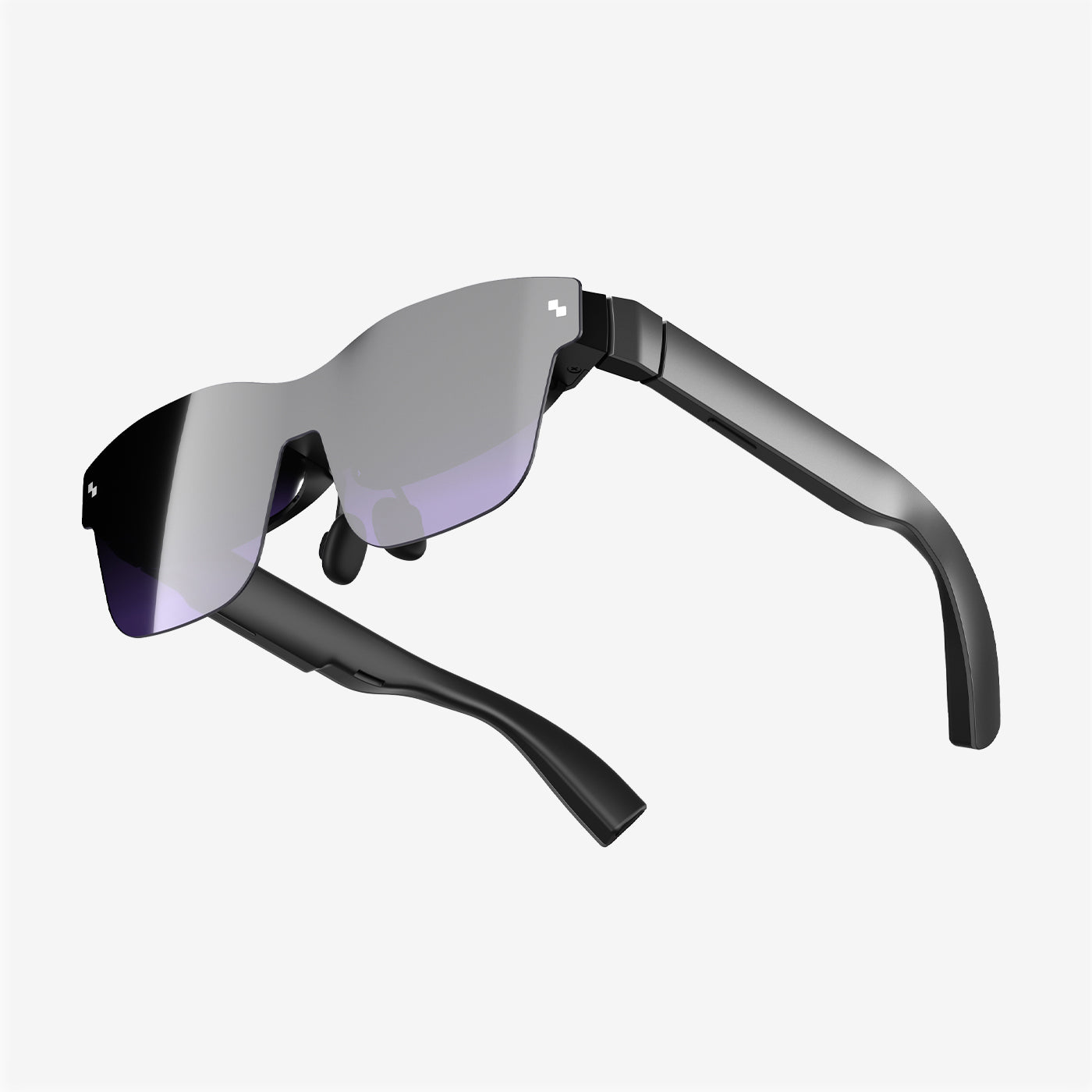
RayNeo X3 Pro Project eSIM and why standalone really matters
Most smart glasses on the market today still rely on a phone nearby. Bluetooth for control. Wi-Fi for data. The phone remains the brain and the gateway. RayNeo’s prototype is attempting to break that dependency entirely.
A complete communication device, not an accessory
The X3 Pro Project eSIM integrates camera, display, and 4G cellular connectivity directly into the frame. With a standalone eSIM, the glasses can handle calling, data access, and cloud services on their own. That means going for a run, commuting, or even driving without needing a phone in your pocket to stay connected.
This might sound incremental, but it is foundational. Once glasses can function independently, they stop being peripherals and start behaving like primary devices.
Always connected experiences without friction
Native cellular connectivity enables use cases that feel much closer to how people already rely on phones. Streaming music directly to the glasses. Real-time translation across 14 languages without tethering. Instant cloud backup of photos and videos the moment they are captured. These are not futuristic demos. They are basic expectations for connected devices, and AR glasses have struggled to meet them until now.
By embedding connectivity directly into the hardware, RayNeo is designing for real-world usage rather than lab scenarios.

From accessory to personal computing center
What RayNeo is really signaling with Project eSIM is a long-term ambition. AR glasses as an all-scenario personal computing center. Something you wear continuously, not something you occasionally pull out.
That vision aligns closely with how telecom operators think. Always connected. Always authenticated. Always billing. Always service-enabled. From that perspective, smart glasses fit surprisingly well into existing operator logic.
About RayNeo and its current market position
RayNeo is not approaching this from the margins. The company is already one of the most visible consumer AR brands globally. It is the Official Worldwide Olympic Partner in the AR glasses category and has built a portfolio spanning AI-enhanced full-color display devices in its X Series and portable large-screen viewing in its Air Series.
According to Counterpoint Research, RayNeo led the global AR glasses market in Q3 2025 with a 24 percent market share, placing it ahead of many better-known consumer electronics brands. That context matters. Telecom operators are not betting on an unproven startup. They are aligning with a company that already understands scale, supply chains, and consumer adoption.
Conclusion: how this compares to the rest of the market
Across the AR and smart glasses landscape, a clear pattern is emerging. Companies like Meta, Apple, Xiaomi, and Huawei are all experimenting with wearables that sit closer to the face. Most of them still treat connectivity as something borrowed from the phone. Even Meta’s Ray-Ban smart glasses remain heavily dependent on a paired smartphone for anything beyond basic capture and playback.
RayNeo’s approach stands out because it tackles connectivity head-on rather than as a secondary feature. By integrating eSIM and working directly with telecom operators, it is aligning itself with the same forces that historically turned niche devices into mass-market ones. Phones became dominant not just because of better hardware, but because operators subsidized them, bundled them, and normalized them.
The broader trend is clear. Wearables are moving toward independence. Smartwatches already made that jump with LTE and eSIM variants. AR glasses appear to be next. Analysts at firms like Counterpoint and CCS Insight have repeatedly pointed to connectivity as the missing piece holding AR back from everyday relevance.
If RayNeo can turn Project eSIM from prototype into a commercially viable product, it will not just be launching another pair of smart glasses. It will be testing whether AR can finally step out of the shadow of the smartphone and claim its own place in the connected device hierarchy. And with telecom giants now at the table, that experiment suddenly looks a lot more serious.