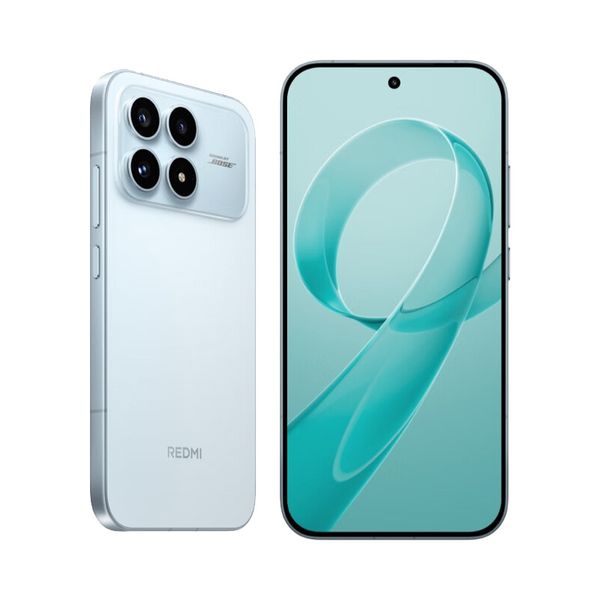
Xiaomi eSIM Phones: Every Compatible Model in 2026
Xiaomi was late to eSIM compared with Apple, Google and Samsung, but that gap has narrowed considerably. What used to be a feature on one or two Xiaomi flagships is becoming normal across its international premium range.
That matters for travelers. An eSIM phone can keep a home number active while adding a local or travel data plan without swapping plastic SIM cards or hunting for a shop after landing. The catch is very Xiaomi: model names are not enough. Region, firmware, operator support and even closely related devices can change the answer.
As of September 2026, these are the Xiaomi-branded phones for which Xiaomi itself documents eSIM support on international or European product and support pages.
Xiaomi’s eSIM rollout
The starting point was the Xiaomi 12T Pro. Xiaomi lists it with either nano-SIM + eSIM or two nano-SIMs, making it the company’s first widely sold global phone with documented eSIM support. The Daniel Arsham Edition uses the same configuration.
The 13 generation was where Xiaomi stopped treating eSIM like an experiment. The Xiaomi 13, 13 Pro and 13 Lite all support nano-SIM plus eSIM, as do the later Xiaomi 13T and 13T Pro.
There is an oddity buyers should remember: the Xiaomi 13 Ultra does not join them. Xiaomi’s specification page lists dual nano-SIM only. The same happened with the Xiaomi 14 Ultra. Expensive, “Ultra” and eSIM-capable are not synonyms in Xiaomi’s catalogue.
The complete Xiaomi eSIM phone list
Availability can still vary by region, device version and carrier.
eSIM availability can vary by country, regional device version, software configuration and mobile operator.
Check the exact model specifications before buying a phone specifically for eSIM use.
That is the useful global-market list, rather than every handset sold under Xiaomi’s wider corporate umbrella. If the missing “16” looks strange, it is deliberate: Xiaomi skipped that flagship number and moved from the 15 generation to the 17 series.
Redmi and POCO now have eSIM models too, including the REDMI Note 13 Pro 5G, REDMI Note 14 Pro 5G/Pro+ 5G and newer POCO models, but they should be treated as separate product families.
Single eSIM versus dual eSIM
The bigger change is not simply that Xiaomi supports eSIM. Newer phones support it more flexibly.
Older models such as the 12T Pro and much of the 13 family generally combine one nano-SIM with one eSIM. By the 14T generation, Xiaomi was explicitly offering nano-SIM + nano-SIM, nano-SIM + eSIM, or eSIM + eSIM. The Xiaomi 15, 15 Ultra, 15T and 15T Pro continue that approach, and current 17-series specifications also list dual-eSIM configurations.
Xiaomi says some phones can store multiple eSIM profiles. Its support documentation says each eSIM-capable slot can store up to five profiles, subject to available secure memory. On the Xiaomi 15, for example, Xiaomi says up to ten profiles can be stored.
For a frequent traveler, this matters more than the phrase “supports eSIM.” A practical setup could be a primary line, a business eSIM and several dormant travel profiles, with only the needed lines switched on for each trip.
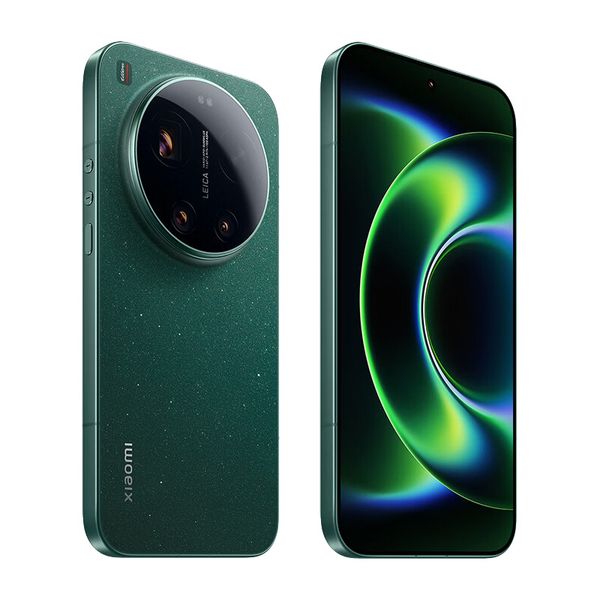
The regional trap
This is the part many compatibility lists undersell. Xiaomi repeatedly states that eSIM availability depends on country, region and carrier.
A European Xiaomi 15 may expose the eSIM controls expected from the specification sheet, while another regional variant can behave differently. Imported Chinese-market devices deserve particular caution. Buying a phone because the global model supports eSIM does not guarantee that an apparently identical unit from another market will.
Before buying, check the exact regional model, then look under Settings > Mobile networks for eSIM controls and confirm the EID. Xiaomi’s newer phones allow QR-code activation and, on some models, device-to-device eSIM transfer. Carrier support still matters.
This makes Xiaomi less straightforward than Apple or Google. Apple has pushed some iPhones into eSIM-only territory, while Google’s US Pixel 10 family removed the physical SIM on most models. Samsung supports eSIM across a broad Galaxy range, including flagships, foldables and several A-series devices.
Xiaomi remains more conservative. For many travelers, that is not necessarily a weakness. Keeping a physical SIM tray while adding eSIM is still the most forgiving arrangement in markets where eSIM provisioning remains inconsistent.
What Xiaomi still needs to fix
The biggest problem is clarity. Xiaomi’s hardware is now ahead of its communication. A customer should not need to compare a global specification page, local product page and support FAQ to work out whether an expensive phone accepts an eSIM.
The inconsistent Ultra history makes that worse. The 13 Ultra and 14 Ultra shipped without eSIM support on their global specifications, then the 15 Ultra and 17 Ultra brought it back. Foldables have also been inconsistent: the global MIX Flip specification lists two nano-SIMs, not eSIM.
If connectivity flexibility matters, buyers should choose by verified SIM configuration rather than simply buying the most expensive Xiaomi available.
Conclusion
Xiaomi is no longer an eSIM laggard. It is helping move eSIM from premium-phone novelty to standard Android functionality, and the timing matters. GSMA Intelligence expects consumer eSIM penetration to double during 2026 and double again in 2027. Xiaomi remains one of the world’s three largest smartphone vendors, so every additional eSIM-capable generation expands the market for operators and travel eSIM providers.
Yet Xiaomi is taking a different route from Apple’s aggressive eSIM-only strategy. Its strongest global phones increasingly support dual eSIM while retaining physical SIM flexibility. That hybrid approach may actually suit international travelers better today.
The next step is not more models. It is consistency. If Xiaomi can make eSIM standard across its premium phones, foldables and regional variants — and explain compatibility without forcing buyers into a support-page detective story — it will have one of the most travel-friendly device portfolios in Android.