


Timekettle LiveTalk: $129 AI Translation Earbuds Debut
Translation earbuds are starting to look less like specialist travel gadgets and more like ordinary headphones. Timekettle is betting on that shift with LiveTalk, launched on October 8, 2026. At $129, the open-ear earbuds combine music, calls and AI-powered interpreting.
The idea sounds straightforward. Wear the same earbuds on your commute, during a lecture and at a hotel check-in abroad. Instead of carrying a separate translator, you switch modes in an app.
Yet this launch raises an interesting question. Can dedicated translation earbuds offer enough extra convenience when Apple and Google already bring translation into mainstream headphones?
Translation beyond the airport
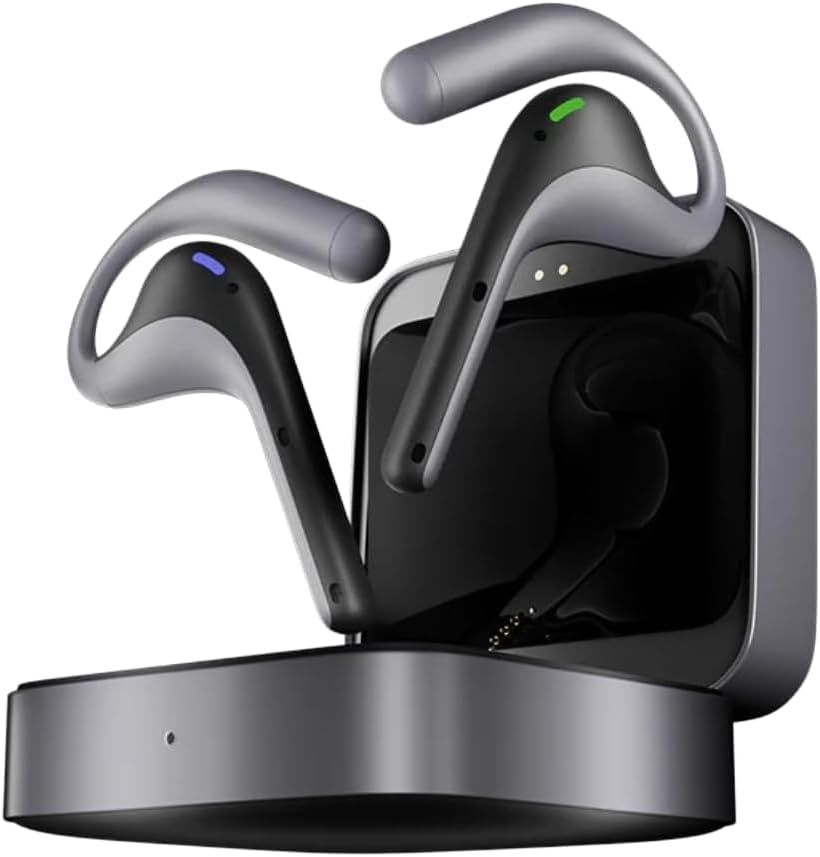
Timekettle positions LiveTalk between casual travel accessories and its more specialized interpreting products. Each earbud weighs 6.9 grams and hooks over the ear. Consequently, users can hear surrounding sounds without sealing their ear canals.
That design makes sense for walking through unfamiliar cities or speaking with hotel staff. However, open-ear audio offers less isolation in noisy places. A crowded station could expose the trade-off between awareness and speech clarity.
READ MORE: Timekettle W4 Pro Earbuds: Redefining Real-Time Translation with AI-Powered Innovation
“Language barriers don’t only happen in formal meetings — they happen while traveling, studying, making a phone call, watching foreign-language content or simply meeting someone new,” said Leal Tian, Timekettle’s founder and CEO.
“With LiveTalk, we wanted to make real-time interpreting something people can naturally use throughout the day, rather than a device they only reach for in specific moments.”
The company calls its software Babel OS 3.0. It promises more natural phrasing through AI Translation Refinement, rather than strictly literal output. Still, Timekettle has not supplied independent, real-world accuracy testing with this announcement.
Four ways to translate
LiveTalk offers four modes, covering situations beyond a face-to-face conversation:
- Face-to-Face Translation: The smartphone microphone captures speech and sends translated audio to the earbuds. This could help with restaurant orders, directions or hotel check-ins.
- Live Listening: Users hear interpreted speech while reading translated text on their phones. AI Live Summary also extracts key points from longer lectures, tours and presentations.
- Voice Call Translation: LiveTalk interprets supported phone and online calls. That could appeal to students, international families and occasional cross-border business users.
- Multi-Media Translation: The system handles foreign-language audio from videos, podcasts and online learning content. It could make a language-heavy commute more productive.
READ MORE: Timekettle WT2 Edge Earbuds
Meanwhile, dual-device Bluetooth connections work in call and multimedia modes. For example, someone can connect a laptop and phone without repeatedly pairing the earbuds.
However, the phone remains central to the experience. Timekettle’s FAQ also says translation requires both earbuds connected, although single-earbud music and calls still work. That’s a practical limitation worth knowing before purchase.
Languages, offline use and sound
LiveTalk supports online translation across 54 languages and 108 accents. It also offers 25 downloadable offline language pairs. That’s particularly relevant during flights, roaming outages or trips with patchy mobile coverage.
Still, offline support isn’t universal. Travelers should download the necessary pairs beforehand and check whether their preferred languages appear on the list. Likewise, offline translation shouldn’t imply that every online feature works without connectivity.
READ MORE: Roaming and Language Translation Apps: Breaking Barriers Abroad
Timekettle claims more than four hours of continuous translation per charge. Music playback reaches eight hours, or up to 35 hours with the case. Additionally, a ten-minute charge can provide up to 2.5 hours of use.
For music, the earbuds feature 11mm dynamic drivers, titanium diaphragms and six EQ presets. Users can also customize audio through the app. Translation activates a separate voice-focused sound profile to make speech easier to follow.
Those are welcome touches. Nevertheless, buyers prioritizing noise cancellation or immersive music may prefer conventional in-ear headphones.
The real price
LiveTalk went on sale October 8 for $129, in Star Silver, Polar Black and Deep Sea Blue.
Importantly, the purchase includes 200 free online translation minutes per month, not merely 200 minutes once. Timekettle says they refresh on the first day of each month. Unused minutes don’t carry over.
The announced subscriptions cost $5.99 for 300 additional minutes or $9.99 for unlimited translation. Heavy users should check regional billing terms and ongoing costs before committing. A student attending lengthy foreign-language lectures could exceed the free allowance quickly.
Conversely, occasional travelers may never need a paid tier. Roughly three hours and twenty minutes monthly could cover several short encounters. Timekettle also says an active session won’t end abruptly when the allowance runs out.
A tougher market
LiveTalk isn’t entering an empty market. Apple’s compatible AirPods support Live Translation through supported iPhones and Apple Intelligence. Google offers live conversation translation with Pixel Buds and compatible Android devices. Both companies increasingly treat translation as a headphone feature, not a separate product category.
That creates pressure for specialists. Timekettle must compete on language coverage, translation workflows, comfort and price. More importantly, it must show why people should buy another pair of earbuds.
READ MORE: How to Choose an eSIM
There is also a connectivity angle. Cloud translation depends on a reliable data connection, making offline language packs useful but not equivalent to full online access. Travelers will still need dependable mobile data, whether through local service, roaming or a travel eSIM.
Final Thoughts
LiveTalk’s most interesting feature may be its positioning, not its language count. At $129, Timekettle makes a credible case for translation as an everyday habit rather than an occasional emergency tool.
However, Apple and Google have a structural advantage: millions of customers already own compatible headphones and phones. Timekettle therefore needs a noticeably better experience, not simply a longer specification sheet.
The deciding test will be ordinary conversation: noisy cafés, unfamiliar accents, interrupted speech and weak connections. Until independent testing answers those questions, LiveTalk looks promising rather than proven. For frequent multilingual users, its focused design could justify a separate device. For everyone else, the translation features already on their phone deserve a first look.


