Tele2’s eSIM story
Tele2 eSIM is not one single product. That is the first thing worth clearing up.
Depending on the country, Tele2 may mean a Swedish mobile subscription, a Baltic consumer plan, a prepaid brand, a smartwatch add-on, or a business account. The name is familiar across Northern and Baltic Europe, but the eSIM experience is still local. That matters because a traveler searching for “Tele2 eSIM” is usually looking for one answer. What they find instead is a patchwork of national rules, self-service portals, QR codes, device checks and, sometimes, separate prepaid brands.
That does not make Tele2 weak. It says something important about operator eSIM in 2026: useful, mature, but not always packaged for the person who just landed and needs data.
What Tele2 offers
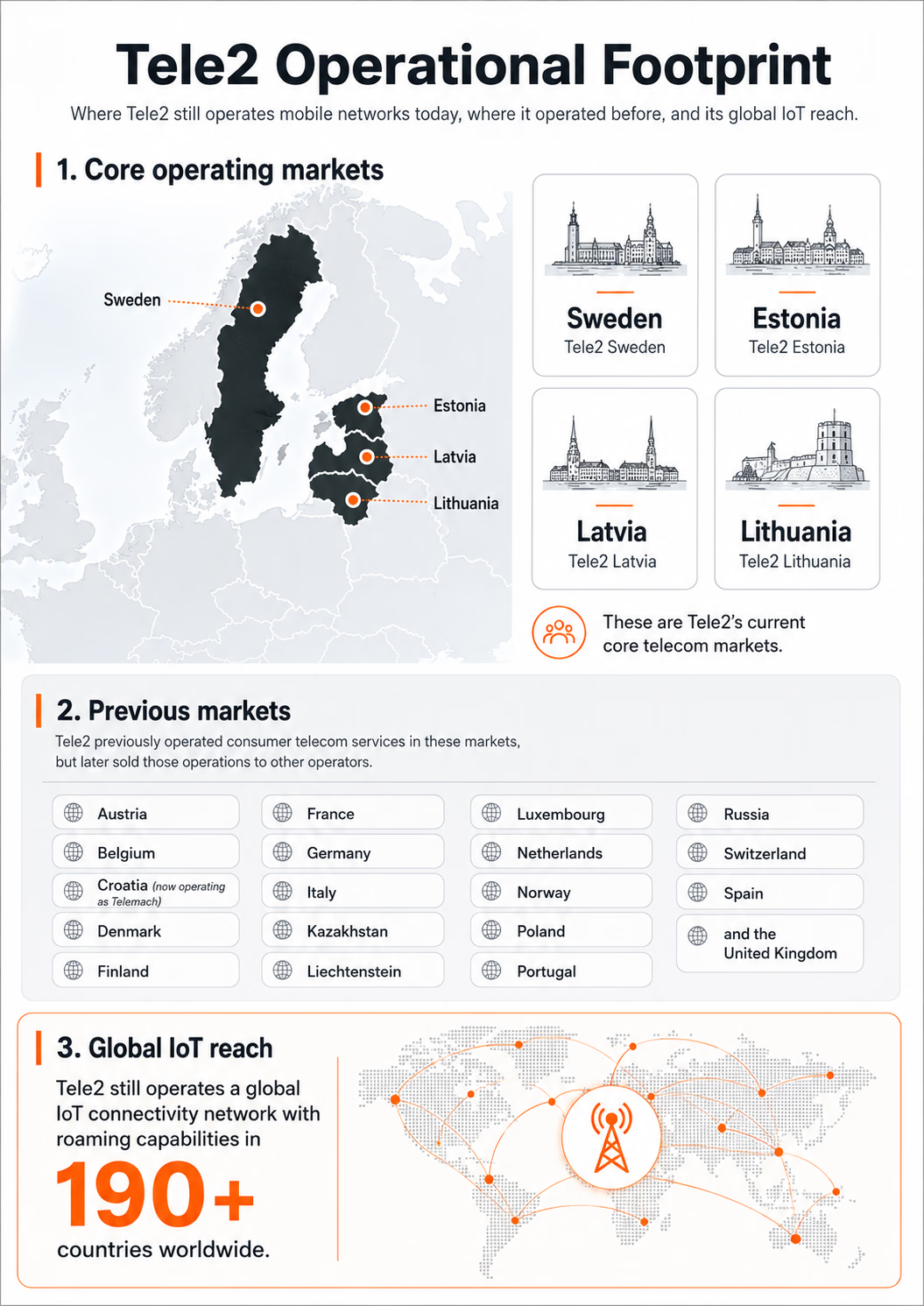
At its core, Tele2’s eSIM is a digital version of the physical SIM card. Instead of waiting for plastic or opening a SIM tray, the customer activates a mobile profile on a compatible phone, tablet, smartwatch, or laptop. Tele2 Sweden presents eSIM for mobiles and smartwatches. Tele2 Estonia describes it as a way to use several numbers on one phone. Tele2 Lithuania highlights the same practical benefit: one device, multiple numbers, less dependency on the physical SIM slot. Tele2 Latvia also supports eSIM ordering through self-service.
For existing customers, the logic is clear. You can move from a plastic SIM to eSIM, replace a SIM, add a second number, or connect a wearable without treating connectivity like a separate gadget purchase. This is where Tele2 has an advantage over travel eSIM apps. It is not only selling temporary data. It is a mobile operator with roaming agreements, support channels and local numbering behind the service.
€8.50 with 24-month plan
€23.50 with 24-month plan
The setup experience
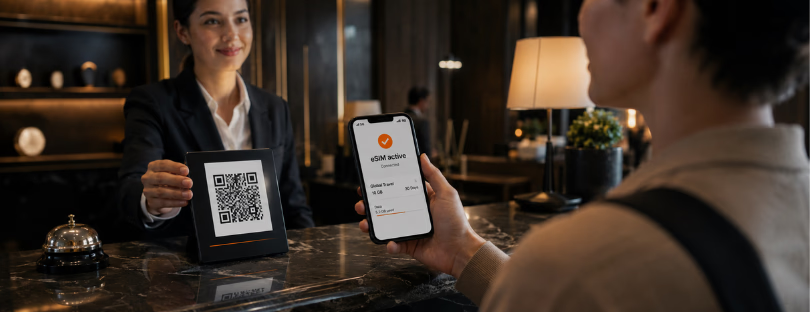
The Tele2 eSIM journey is still recognisably operator-led. You check whether your device supports eSIM, request the eSIM through a Tele2 channel, receive or access a QR code, and download the profile while connected to the internet. Tele2 Estonia’s support pages explain activation through a QR code on an eSIM voucher. Tele2 Latvia says the QR code can be sent by email after an order is confirmed.
This is practical, but it is not the same as the polished “buy, scan, go” flow travelers now expect from global eSIM apps. There can be more friction: account login, local language pages, identification rules, or uncertainty about prepaid access. With eSIM, deleting a profile or changing phones may also mean requesting a new one rather than scanning the old code again.
For a tourist comparing airport Wi-Fi, roaming passes and travel eSIM apps near baggage claim, it may feel like work.
Best fit
Tele2 eSIM makes most sense for people who already have a reason to use Tele2 locally. Residents, long-stay visitors, remote workers settling in for a few months, and companies with local operations are the natural audience. They get the convenience of eSIM without giving up a local operator relationship.
It is also useful for people who carry two numbers. One phone can handle a private and work line, or a home number and a local number, without juggling two physical SIM cards. For smartwatch users, eSIM is even more obvious: the watch becomes a useful backup, not just a notification screen.
The less obvious fit is the short-stay traveler who wants one clean data plan across several countries. Tele2 can be a good local choice, but it is not always presented as a pan-European travel eSIM product. If the trip moves from Sweden or the Baltics to Italy, Turkey, or the US, a dedicated travel eSIM provider may be simpler.
Where it could improve
Tele2’s challenge is not the technology. The challenge is packaging.
Operator eSIM pages often explain what eSIM is, but they do not always answer the questions modern travelers ask first: Can I buy it before arrival? Do I need a local ID? Can I activate it outside the country? Does it include roaming? What happens when I change phones? Can I top up online in English?
Those details decide whether eSIM feels modern or merely digital. Tele2 has strong operator credibility, but the consumer journey can feel split across national websites and sub-brands. That is a normal telecom structure, but less clear for a traveler who sees “Tele2 eSIM” as one product.
Final take about Tele2 eSIM
Tele2 eSIM is a strong local-operator eSIM, not a universal travel shortcut. That distinction matters.
Compared with Telia, Telenor and other Nordic or Baltic operators, Tele2 is moving in the same broad direction: making eSIM part of the standard mobile account rather than treating it as a separate travel product. Compared with Airalo, Ubigi, Nomad eSIM or Yesim, Tele2 has deeper local operator credibility but usually less instant international simplicity.
The wider trend is clear. Traditional operators are no longer ignoring eSIM, but many still frame it as a SIM replacement. Travel eSIM platforms frame it as a purchase experience. The winners will combine both: real network trust, clear activation, transparent roaming rules and fewer account hurdles.
For Alertify readers, the advice is simple. If you live in a Tele2 market or need a proper local mobile relationship, Tele2 eSIM is worth checking. If you are just passing through and want quick data before the plane doors open, compare it with travel eSIM alternatives before committing. The best eSIM is the one that matches the trip, the device and the amount of friction you are willing to tolerate.