


Spendin Adds eSIM as Fintech Moves Beyond Payments
South Africa-headquartered fintech Spendin is preparing to add eSIM connectivity to its financial platform, pushing further beyond payments and into the increasingly busy space where fintech, travel and telecom now overlap.
The move matters because Spendin is not treating connectivity as a standalone travel product. It wants to place mobile data alongside cross-border payments, multi-currency services and virtual cards — making connectivity another utility inside the same app.
That model is already familiar in Europe through players such as Revolut and N26. What makes Spendin more interesting is the African context, where cross-border payments, currency conversion and mobile connectivity can all carry significantly more friction.
From money movement to travel utility
Spendin currently positions itself around sending, spending and swapping money across currencies. Its website lists support for NGN, ZAR, KES, USD, EUR, GBP and CAD, alongside virtual cards and international payments.
Now eSIM is becoming part of that stack.
According to Nairametrics, Spendin plans to let users purchase and activate mobile data packages for African and international destinations, with payment options expected to include local currencies, cards and digital assets.
Timilehin Kayode, Co-Founder and Chief Executive Officer of Spendin, describes the thinking this way:
“We are building an ecosystem where travellers can access financial tools and other essential utilities directly within Spendin, without having to depend on multiple applications or payment options that may not be tailored to their home markets.”
Spendin has also already published an eSIM installation guide dated September 24, covering QR-code and manual installation on iOS and Android. Users are told to confirm that their device supports eSIM, is not carrier-locked and has a reliable Wi-Fi, 4G or 5G connection.
That suggests Spendin is beyond simply exploring the idea and is already preparing the customer journey around activation.
Why the combination makes sense
Travel eSIM is a natural extension for fintech apps because the customer problem is adjacent to what they already solve.
A traveller landing in another country may need foreign currency, card payments, transfers and mobile data within minutes. Traditionally, those services came from different companies. Fintech platforms increasingly see an opportunity to bundle them into one relationship.
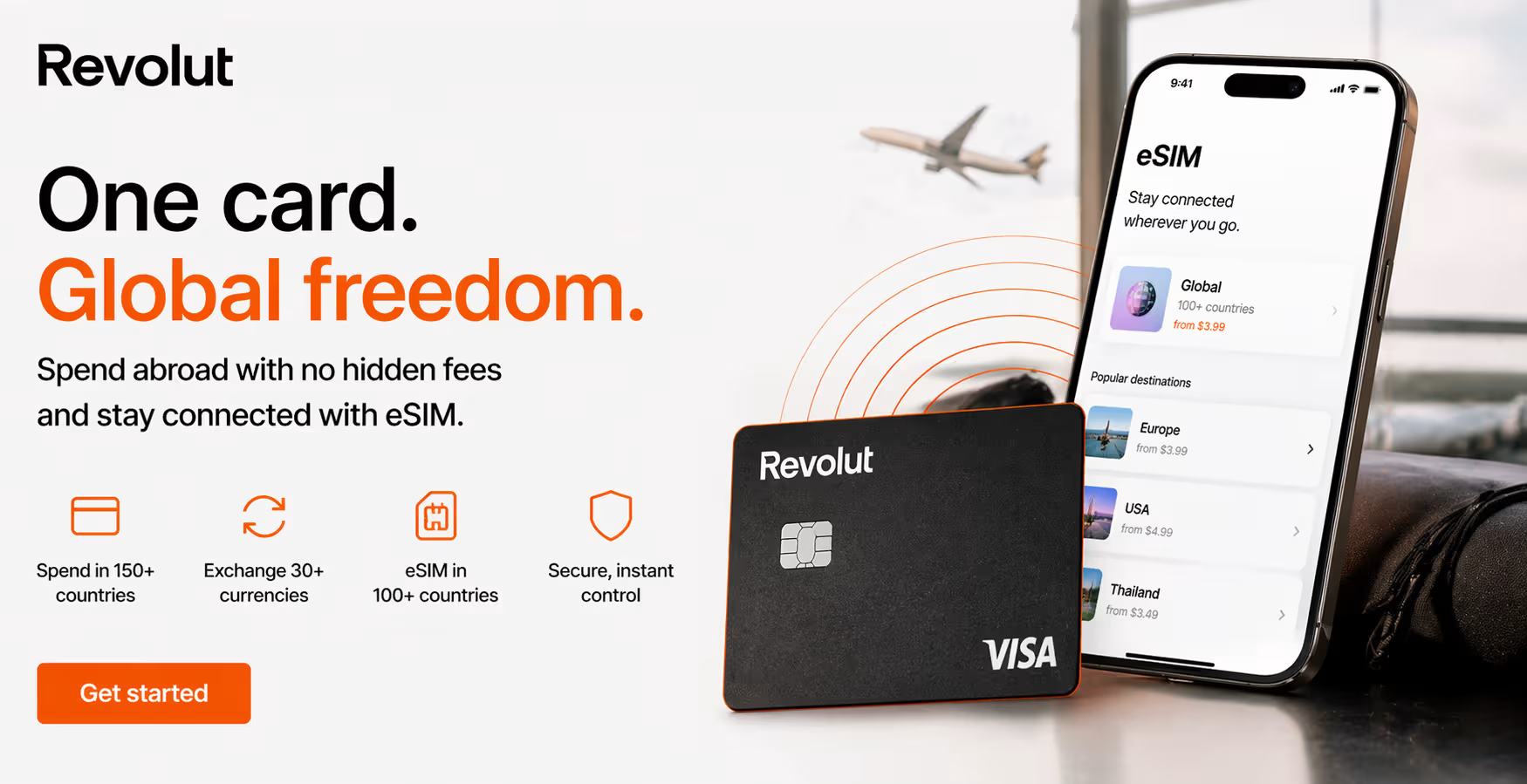
Revolut already sells travel eSIM plans covering more than 100 countries and territories inside its app. N26 also offers an in-app travel eSIM across more than 100 destinations. In both cases, connectivity sits beside banking and travel-related financial services rather than operating as a separate telecom proposition.
Spendin is following the same direction, but with a stronger African cross-border payments angle.
Heritage Falodun, Co-Founder and Chief Operating Officer of Spendin, said customer behaviour is helping determine which services the company adds.
“We pay close attention to how users interact with the platform and the problems they consistently raise. That helps us identify broader, in-demand features worth building,” Falodun said. “At the same time, the Spendin Alpha API allows businesses and fintechs to access some of the cross-border infrastructure we have developed beyond the consumer app.”
That second part matters. Spendin is simultaneously expanding its consumer proposition and opening infrastructure to businesses through its Alpha API. The Guardian Nigeria reported in August that the API gives banks, fintechs, remittance companies and mobile-money operators access to cross-border payment rails through a single integration.
The opportunity — and the missing details
Mordor Intelligence estimates the wider African eSIM market at $280.18 million in 2025, rising to $334.35 million by 2030. Crucially, that figure covers the broader eSIM industry — including hardware, provisioning and enterprise applications — and should not be read as the size of Africa’s travel-eSIM market alone.
Still, the trend is clear. GSMA says eSIM adoption is accelerating globally, while its Mobile Economy Africa 2026 report says mobile technologies contributed $240 billion to Africa’s economy in 2025. Competition is also becoming more local: in September, pan-African cloud communications provider LAfricaMobile launched Yela, a travel eSIM covering more than 190 countries and destinations.
For Spendin, simply adding data plans will not be enough.
The company has not yet publicly detailed many of the points experienced eSIM buyers compare: destination coverage, network partners, plan pricing, validity, throttling or fair-use rules, hotspot support, activation timing and whether the same eSIM can be reused across trips. Those details will determine whether the service is genuinely competitive or mainly convenient for existing Spendin users.
Travellers focused only on the cheapest or most flexible data package may still prefer specialist eSIM providers. Users already embedded in Revolut or N26 may also have little reason to add another financial app purely for connectivity. Spendin’s advantage has to come from making the overall cross-border journey easier for the customers it already serves.
Conclusion: eSIM is becoming a fintech feature
Spendin’s move says something larger about where travel connectivity is heading.
The competitive battle is no longer only between eSIM brands. Banks, fintechs, airlines and travel platforms can increasingly embed connectivity at the moment it becomes useful. Distribution shifts from whoever sells the best data bundle to whoever already owns the customer relationship.
Revolut demonstrated that a banking app can become an eSIM distribution channel. N26 followed with travel connectivity of its own. Spendin is now testing whether that model can work around African cross-border financial behaviour.
If Spendin can combine local payment options, currency exchange, travel spending and connectivity in one genuinely smooth flow, eSIM becomes more than an add-on: it becomes a retention tool.
But convenience alone will not create a moat. The real test will be competitive pricing, transparent network information, reliable activation and enough coverage to stop users opening another app.
That is where the “Revolut of Africa” comparison will either start to look meaningful — or remain just a good headline.


