Do You Still Need a Smartphone Screen Protector?
The smartphone screen protector has become one of those tiny accessories that says a lot about how we use technology now. It is cheap, easy to ignore, usually bought in a hurry, and yet it sits between our fingers and the most expensive device most people carry.
For years, the story was simple: buy tempered glass, avoid scratches, sleep better. But in 2026, that story is less obvious. Phone displays are stronger and brighter. Corning’s newer Gorilla Armor materials, used on flagship Samsung models, are not just about toughness anymore. They are also about glare reduction and clearer visibility outdoors. Apple’s Ceramic Shield has pushed the same idea from another direction: the screen itself is becoming a selling point, not a weakness to cover immediately.
So why is the screen protector market still growing? Because real life does not care about lab tests.
The everyday insurance layer
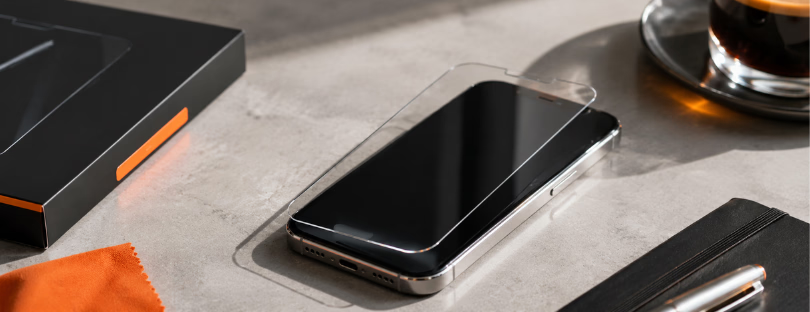
A good screen protector is not magic. It will not make a phone indestructible. It will not save every display from a hard corner impact on bathroom tiles. What it does well is absorb the ordinary punishment that slowly ruins a phone: keys in a bag, sand at the beach, airport trays, rental cars, hotel nightstands, and that one moment when the phone slides off your lap.
That is why tempered glass remains the most sensible choice for most users. It feels close to the original screen, handles scratches better than plastic film, and is cheap enough to replace when it cracks. Strangely, the crack is the point. Better the protector than the OLED panel.
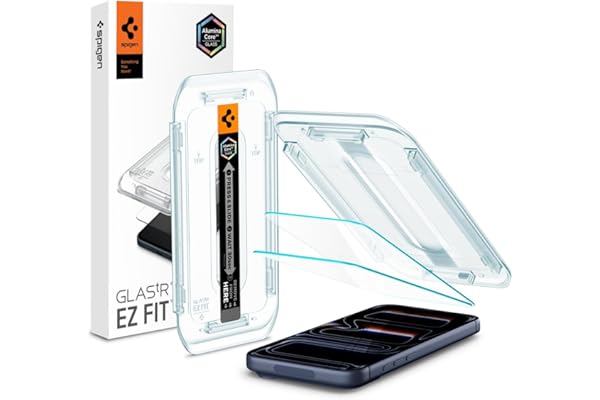
Brands such as Belkin, Spigen, ZAGG, PanzerGlass and ESR are no longer selling just a rectangle of glass. They are selling installation trays, better edge fit, privacy filters, anti-glare coatings and recycled materials. Spigen’s EZ Fit system, for example, became popular because it solved the worst part: the tiny dust bubble that appears after you thought you did everything perfectly.
Privacy is becoming the real upgrade
The more interesting part of this category is not scratch protection. It is privacy.
For travellers, commuters and business users, the phone screen is now a mobile office, boarding pass, bank terminal and identity wallet. A privacy screen protector can make sense if you regularly check work emails on trains, use mobile banking in airports or manage client conversations in public spaces.
The trade-off is real. Privacy filters can slightly darken the display, reduce viewing angles and make photo editing or content work less pleasant. For someone who watches movies on their phone, it may feel like a downgrade. But for a consultant working from an airport lounge, or a traveller handling two-factor authentication while standing in a queue, the compromise can be worth it.
This is where screen protectors quietly overlap with travel tech. The accessory is no longer only about cracked glass. It is about how exposed our digital life becomes in motion.

Not every phone needs one
There is also a fair argument against buying one. Modern flagships have excellent display glass, and some users hate the tiny loss of touch feel or screen clarity that comes with an added layer. If your phone stays in a proper case, rarely shares space with keys or coins, and is covered by AppleCare, Samsung Care+ or another protection plan, a screen protector may be less urgent.
Foldables are another category where caution matters. Many foldable phones come with factory-applied films that should not be removed casually. Adding third-party layers can interfere with hinges, sensors or manufacturer guidance. For these devices, it is better to follow the phone maker’s instructions.
What to buy in 2026
For most people, the sweet spot is still a clear tempered glass protector with an alignment tray. It should be case-friendly, oleophobic, bubble-resistant and properly cut around the camera or sensors. Avoid ultra-cheap multipacks with vague claims and no model precision. Poor fit is worse than none.
Privacy glass is worth considering for frequent travellers, finance professionals, students and anyone who uses sensitive apps in public. Anti-glare protectors are useful if you spend a lot of time outdoors, although newer premium phones are already improving reflection control at the display level.
Plastic PET film is fine for scratch protection, but it feels less premium. TPU can work well on curved screens because it is flexible, but installation is usually more delicate. Ceramic-style protectors sit somewhere in between, often marketed as tougher and thinner, but quality varies heavily by brand.
Final take
The screen protector is not dead. It is just becoming more specific.
For cheap and mid-range phones, it remains one of the simplest ways to extend device life. For expensive flagships, the case is more nuanced. Corning, Samsung, Apple and other display players are making screens tougher and smarter, so the old “everyone must use tempered glass” advice feels outdated. But accessory brands are adapting too, moving toward privacy, anti-glare, easier installation and sustainability.
That is probably the future of this category: less fear-based selling, more use-case selling. The best screen protector is not necessarily the hardest one. It is the one that matches how you actually use your phone. If your phone lives in airports, taxis, hotel rooms and work chats, protection still makes sense. If it mostly lives on your desk, maybe the better investment is a strong case and a little less anxiety.