


Roaming Passes Are Products. Travel Membership Is a Relationship.
A five-day roaming bundle solves one trip. A persistent travel proposition combining connectivity, security, priority support, multi-device access and partner benefits could do something more valuable: protect the operator’s relationship with frequent travelers throughout the year.
There is nothing fundamentally wrong with the roaming pass.
It solved one of mobile’s oldest travel problems: customers wanted to keep their number, land abroad, switch on their phone and know what the bill would look like. Daily passes and fixed-duration bundles made roaming simpler and more predictable.
But simplicity has moved again.
A traveler heading to New York today may already have an eSIM inside a banking app, a global-data allowance bundled into a subscription, a company travel policy, or several travel eSIM brands fighting for attention before the suitcase is packed.
The operator is no longer competing only on roaming price. It is competing for the right to remain part of the trip.
The problem with a product that ends
A customer buys five days of data. The trip finishes. So does the proposition.
Six weeks later, the same customer travels again and the commercial conversation starts from zero. Another roaming pass? A local SIM? Airalo? Holafly? A work phone? Perhaps the customer discovers that their bank already includes mobile data.
That is uncomfortable for operators because they begin with an enormous advantage. They already have the customer’s primary number, billing relationship, app, device history and often years of behavioral data.
Yet when travel begins, many reduce that relationship to a temporary add-on.
Compare that with how airlines, hotel groups and financial platforms think about frequent customers. The objective is not merely to sell the next transaction. It is to create enough recurring usefulness that the customer stops reconsidering the relationship every time.
Roaming could move in the same direction.
Revolut shows where this can go
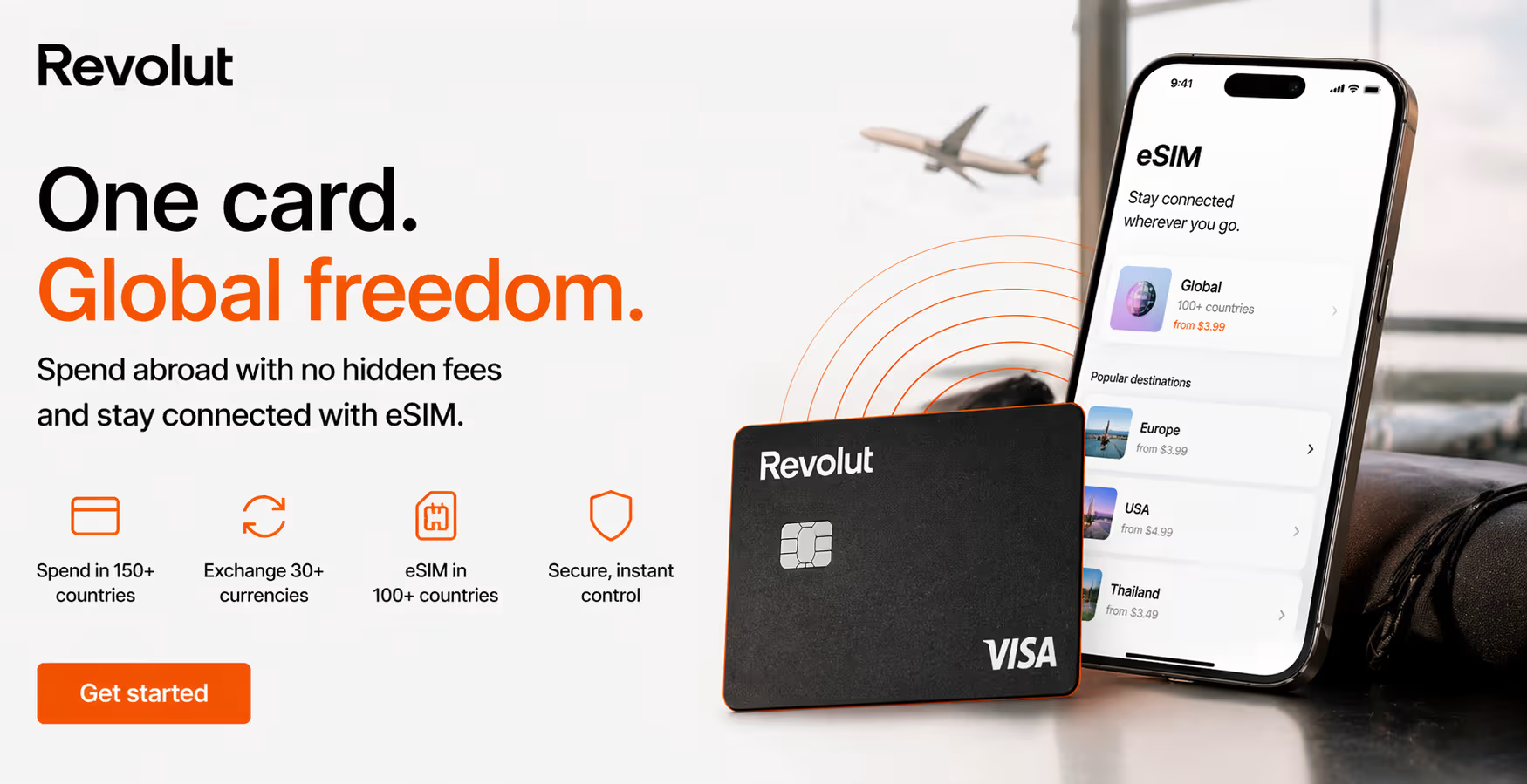
Revolut is particularly interesting because it is not a telecom operator, yet its paid plans increasingly resemble a travel membership.
In Croatia, Revolut’s current plan structure includes global mobile data on paid tiers, while Ultra adds benefits including unlimited airport lounge access, Fast Track and travel protection. Revolut says Ultra includes 5GB of global data per month in Croatia. Its eSIM proposition sits inside the same app as payments, foreign exchange and travel services.
READ MORE: Roaming Add-on or eSIM: Which One Actually Makes Sense?
Together, however, they change the proposition. Connectivity becomes one component of an ongoing travel relationship rather than something purchased only after crossing a border.
The real competitive question is not whether an MNO can sell cheaper gigabytes than Revolut. It is whether the operator can create a reason for a frequent traveler to think, “I already have this covered.”
What membership could actually include
A credible travel membership would have to start with connectivity, because that is where operators have an obvious advantage.
International data could be permanently available across a defined footprint instead of activated trip by trip. Additional allowances could cover a tablet, smartwatch or laptop. Families might share an international pool. Business travelers could receive priority support from agents who actually understand roaming failures and network selection.
Security is another natural extension. Public Wi-Fi protection, scam alerts, malicious-site blocking, device-loss assistance and identity services fit the travel context without forcing an operator to pretend it is a tour company.
READ MORE: Embedded eSIM Is Changing Travel Connectivity
Airport Fast Track, lounge discounts, travel insurance, airport transfers, hotel privileges or loyalty rewards could make sense, particularly at higher tiers. But operators should resist turning membership into a random bag of coupons. Customers quickly spot benefits that exist mainly to inflate the advertised value of a subscription.
The proposition has to solve recurring travel friction.
Google Fi offers another useful reference point. Its Unlimited Premium plan includes international data in more than 200 destinations and connectivity for tablets and laptops, with no separate travel pass required. That is still fundamentally a telecom plan, not a broad travel club, but the philosophy matters: international connectivity is persistent.
The economics are harder than the marketing
Frequent travelers are exactly the customers most capable of consuming expensive benefits.
Give someone monthly international data, airport services, premium support and insurance, and the economics can deteriorate quickly if the pricing and partner structure are wrong. Operators would need careful segmentation, negotiated wholesale economics and probably several membership tiers.
Someone taking one overseas holiday every two years probably needs a transparent roaming pass, not another monthly subscription. Customers who enjoy shopping aggressively for the cheapest eSIM may see little value in paying for convenience.
READ MORE: Revolut Mobile Brings eSIM Plans to the Netherlands
That is fine. A good membership does not need to replace roaming passes.
It needs to serve the customers for whom repeated travel makes continuity more valuable than occasional savings.
There is also plenty operators could improve before adding another subscription to the bill. Roaming notifications remain confusing in some markets. Fair-use rules can be buried. Support often becomes surprisingly weak once the customer leaves the home network. Fixing those basics may deliver more loyalty than adding a lounge voucher.
Your customers will buy connectivity. The question is: from you, or from someone else?
We help airlines, banks, and travel platforms turn that demand into a built-in product — not a missed opportunity.
Conclusion: the battle is moving beyond roaming
The most interesting shift in travel connectivity is not the arrival of another eSIM brand. It is the widening group of companies capable of owning the traveler relationship.
Revolut can combine payments, foreign exchange, insurance, airport services and mobile data because connectivity no longer needs to be sold by a telecom company. Travel eSIM providers such as Airalo and Holafly have built destination-led purchasing habits. Google Fi demonstrates the opposite model: make international connectivity part of the core mobile subscription and remove the purchase decision almost entirely.
Their opportunity is not to copy Revolut feature for feature or turn a mobile tariff into a lifestyle club. It is to use the assets they already possess—trusted billing, the primary number, network knowledge, multi-device connectivity and customer support—to make travel feel permanently handled.
A roaming pass asks: how much can we earn from this trip?
A travel membership asks a harder question: how much more valuable can we become to this customer because they travel?


