Revolut Mobile Enters Germany With 120GB for €14.99
Revolut officially launched Revolut Mobile in Germany on October 14, 2026, bringing its app-based mobile service to a market where it already has more than three million customers.
The service, powered by telecom technology provider 1GLOBAL and running on Telefónica Deutschland’s O2 network, turns Revolut from a seller of occasional travel eSIM packages into a potential everyday mobile provider.
Germany is the fourth European market for Revolut Mobile, following the UK, Poland and the Netherlands. The German launch will roll out gradually over the coming weeks rather than becoming available to everyone immediately.
What German customers actually get
At €14.99 per month, Revolut is positioning its new service as a straightforward alternative to conventional mobile contracts.
There are additional benefits, too. Customers can transfer their existing number, receive a new one or pay extra for a personalised VIP number. They can also manage up to three additional numbers, receive a NordVPN subscription and use RevPoints towards their monthly bill.
READ MORE: Revolut Mobile Brings eSIM Plans to the Netherlands
Perhaps the most travel-friendly feature is the Messaging Pass, allowing supported messaging apps to remain accessible in more than 140 countries at speeds of up to 2Mbps.
One important distinction: unlimited data does not mean unlimited high-speed data. At 2Mbps, basic browsing and messaging remain practical, but demanding applications may struggle.
Why Revolut is entering the mobile business
Revolut already knows how to sell connectivity. Its travel eSIM offering introduced customers to buying mobile data without visiting a shop or handling a physical SIM card.
A domestic subscription changes that relationship.
Travel eSIMs are occasional purchases. A primary mobile plan is used every day, creating recurring revenue and another reason for customers to remain within the Revolut ecosystem.
READ MORE: Revolut’s eSIM Strategy Is Bigger Than Travel Data
Elyas Sadou, Head of Product at Revolut Mobile, describes the ambition:
“With Revolut Mobile, we’re bringing the same disruptive energy to telecoms that we brought to banking.”
The business case goes beyond subscription income. Customers can pay using RevPoints, manage their mobile service alongside their finances and potentially become more engaged with Revolut’s wider products.
That’s an important distinction. Revolut isn’t simply trying to sell cheaper data. It’s making mobile connectivity another part of its customer relationship.
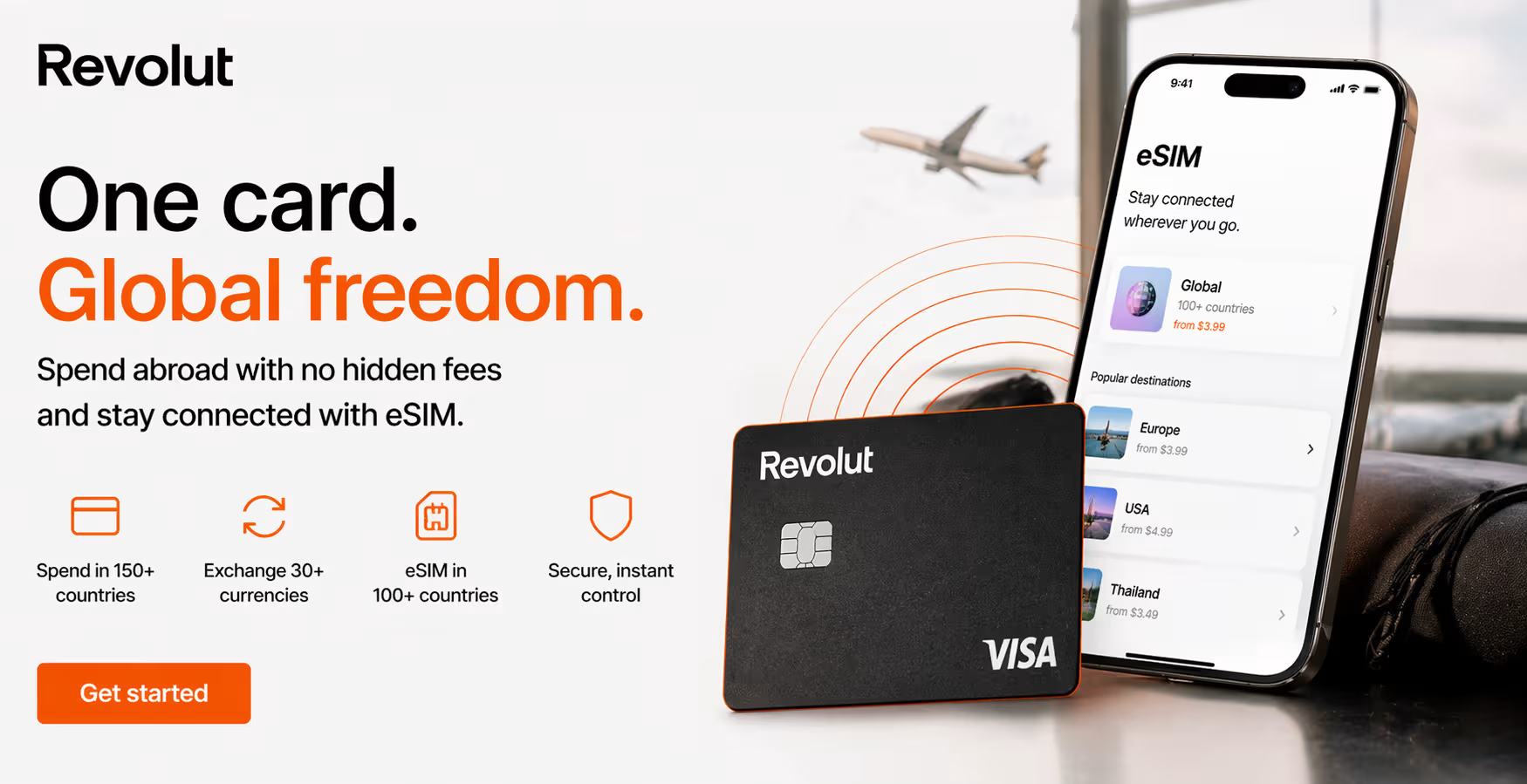
The telecom infrastructure behind the offer
Revolut isn’t building a German mobile network. Telefónica Deutschland supplies the radio infrastructure, while 1GLOBAL provides the telecommunications platform and underlying service.
Under Revolut’s published terms, 1GLOBAL is the mobile service provider, while Revolut markets and facilitates subscriptions as its agent.
READ MORE: What Fair Usage Policy (FUP) Really Means for eSIM Users (And Why You Should Care)
Hakan Koç, founder and CEO of 1GLOBAL, says the partnership allows Revolut to offer services that are “faster to activate, simpler to manage and more transparent than traditional offerings.”
For 1GLOBAL, Germany represents another demonstration of how its embedded telecom model can support brands beyond conventional operators.
For Telefónica, the opportunity is different: wholesale network capacity becomes a way to reach customers through brands that already have strong digital relationships.
Is €14.99 genuinely competitive?
On paper, 120GB for €14.99 looks attractive, especially with 40GB of roaming included.
But Germany already has a competitive market of low-cost mobile brands, including sim.de, fraenk and established operator sub-brands.
Revolut‘s advantage isn’t necessarily the lowest possible price. It’s the combination of connectivity, international features, flexible cancellation and integration into an app customers already use.
READ MORE: eSIM White Label: Launch Your Own Telecom Product
There is a caveat, however. German technology publication Golem notes that Revolut’s original 2025 proposal indicated €12.50 for unrestricted unlimited data. The launched product costs more and introduces a high-speed data threshold.
That makes the final offer less generous than initially suggested.
Customers who prioritise maximum network speeds, extensive physical support or a particular network may find traditional operators more suitable. Revolut also has to prove that its app-first approach delivers reliable telecom customer support when something goes wrong.
Banks are becoming telecom competitors
Revolut is not alone.
German digital bank N26 already offers mobile plans powered by 1GLOBAL, using Vodafone’s network. Meanwhile, Klarna has entered the US mobile market.
These developments reveal an emerging competitive model: financial platforms distribute mobile connectivity, telecom enablers handle technical complexity, and established operators supply network access.
The interesting question is whether customers will increasingly choose mobile services based on the digital ecosystem they use rather than the operator’s brand.
Conclusion: The real competition is for customer relationships
Revolut Mobile doesn’t threaten traditional telecom operators simply because it offers 120GB at a competitive price. Germany already has plenty of attractive mobile deals.
The greater challenge is who owns the customer relationship.
Revolut, N26 and Klarna are demonstrating that a company no longer needs to build a mobile network to compete for subscribers. It needs a recognised brand, an established customer base and a capable telecom partner.
For operators, that creates both opportunity and risk. Wholesale agreements generate business, but consumer loyalty may increasingly belong to the platform selling the service.
For Revolut, the real test is retention. A competitive launch price can attract subscribers; network reliability, transparent roaming conditions and dependable support will determine whether they stay.
If this model succeeds, mobile connectivity could increasingly become a feature of everyday digital platforms rather than a service purchased exclusively from telecom companies.
And that would be a much more significant change than another €14.99 mobile plan.