


LemFi Launches eSIM, Savings and Credit in Major Push
LemFi is no longer content with being the app people open when they need to send money home. The fintech company is making a much bigger play: becoming the financial platform people rely on when their lives, families and ambitions stretch across several countries.
LemFi unveiled its largest product expansion to date, introducing UK savings and credit products, mobile data eSIMs for more than 100 destinations, and a completely rebuilt application. The announcement comes with a new global brand identity, “Ambition has no passport,” intended to reflect how the company sees its customers: not simply as remittance users, but as people building financial lives across borders.
Behind LemFi’s new connectivity offering is 1GLOBAL, the global eSIM infrastructure provider powering the service. Rather than building its own telecom infrastructure, LemFi uses 1GLOBAL’s connectivity capabilities to offer mobile data directly within its financial application. It is another example of embedded connectivity becoming a distribution strategy: fintech companies own the customer relationship, while specialist telecom providers supply the underlying technology and network access.
The scale is already significant. LemFi reports more than two million customers, international transfers to over 30 countries and monthly transaction volumes exceeding $2 billion. Its next challenge is turning that existing customer relationship into something substantially broader.
The Financial Problem Doesn’t End With a Transfer
Moving abroad often means starting from scratch financially, even when someone arrives with years of professional experience, stable earnings and a strong credit record.
A Nigerian professional relocating to London, for example, might have no trouble demonstrating employment or income but still struggle to access credit because their financial history was built elsewhere.
It’s a structural problem affecting an enormous market. According to the International Organization for Migration’s World Migration Report 2026, approximately 304 million people were living outside their country of birth by mid-2024. Global remittances were estimated at $905 billion in 2024.
READ MORE: Why 1GLOBAL Is More Than a Travel eSIM Brand
LemFi sees an opportunity in the gap between these international lives and financial products designed primarily for domestic customers.
“We started LemFi because sending money home was broken. What we learned is that the harder problem starts after the transfer,”
said Ridwan Olalere, LemFi’s co-founder and CEO.
That observation explains the company’s new direction better than its branding campaign does.

Savings, Credit and Connectivity in One App
International transfers remain LemFi’s foundation, but the expanded platform introduces several services designed to keep customers engaged between transactions.
In the UK, its Instant Access Savings Account offers a promotional 5% AER for the first six months, followed by a 3.04% AER variable tracker rate linked to the Bank of England base rate. Customers can open an account from £1 and withdraw without penalties.
Deposits are held by ClearBank, with eligible balances protected under the Financial Services Compensation Scheme up to £120,000 per depositor across accounts sharing the relevant banking licence. Importantly, that protection applies to eligible savings deposits, not automatically to every balance held within LemFi.
READ MORE: How fintech, neobanks, travel platforms embed connectivity
The company is also introducing UK credit through a revolving credit line, subject to eligibility and availability. The service is connected to Pillar, the FCA-regulated credit business acquired in 2025, and supports virtual-card payments through Apple Pay and Google Pay. Eligible users can also access their Equifax credit scores in the app.
These additions matter because sending money internationally is only one part of a migrant customer’s financial routine. Saving for a deposit, building creditworthiness or managing everyday spending can be equally important.
Savings and credit are initially available in the UK, with expansion into additional markets planned.
Why eSIM Is More Than an Extra Feature
For Alertify readers, perhaps the most interesting addition is LemFi’s move into mobile connectivity.
The company now offers travel eSIMs covering more than 100 destinations, allowing customers to purchase mobile data through the same application they use for international payments.
At first glance, connectivity might seem like an unusual addition to a financial platform. In practice, the connection is fairly logical.
Someone relocating internationally often needs mobile internet immediately: to navigate an unfamiliar city, contact family, access banking applications or complete digital identity checks.
READ MORE: Sends Adds eSIM Travel Data Directly Inside Its App
A data eSIM addresses that need without requiring the customer to find a physical SIM card after arrival.
But the commercial implications extend beyond convenience.
For LemFi, eSIM creates another reason for customers to open the application, particularly before international trips. It also introduces an additional potential revenue stream without requiring LemFi to operate its own mobile network.
The real question is whether its data plans can compete on price, validity, network quality and ease of activation. Convenience alone won’t necessarily persuade experienced travellers to abandon specialist eSIM providers.
A Redesign With Bigger Ambitions
LemFi says its application has been rebuilt to support several financial products across multiple countries within a single customer account.
That is an important distinction. Adding new features to a remittance application is relatively straightforward. Designing an experience that can accommodate different financial services, eligibility requirements and regulatory environments is considerably harder.
READ MORE: N26 Adds Travel eSIMs to Its Banking App in Italy
The accompanying brand campaign reflects that evolution.
Isabel Ron-Pedrique, LemFi’s VP of Design and Brand, describes the new positioning as an expression of customers’ ambitions rather than simply a marketing slogan.
Whether the company delivers on that promise will depend less on advertising and more on how consistently the expanded services work across markets.
Conclusion: The Next Fintech Battle Is About Owning the Cross-Border Customer
LemFi’s expansion arrives as the distinction between financial services and connectivity becomes increasingly blurred.
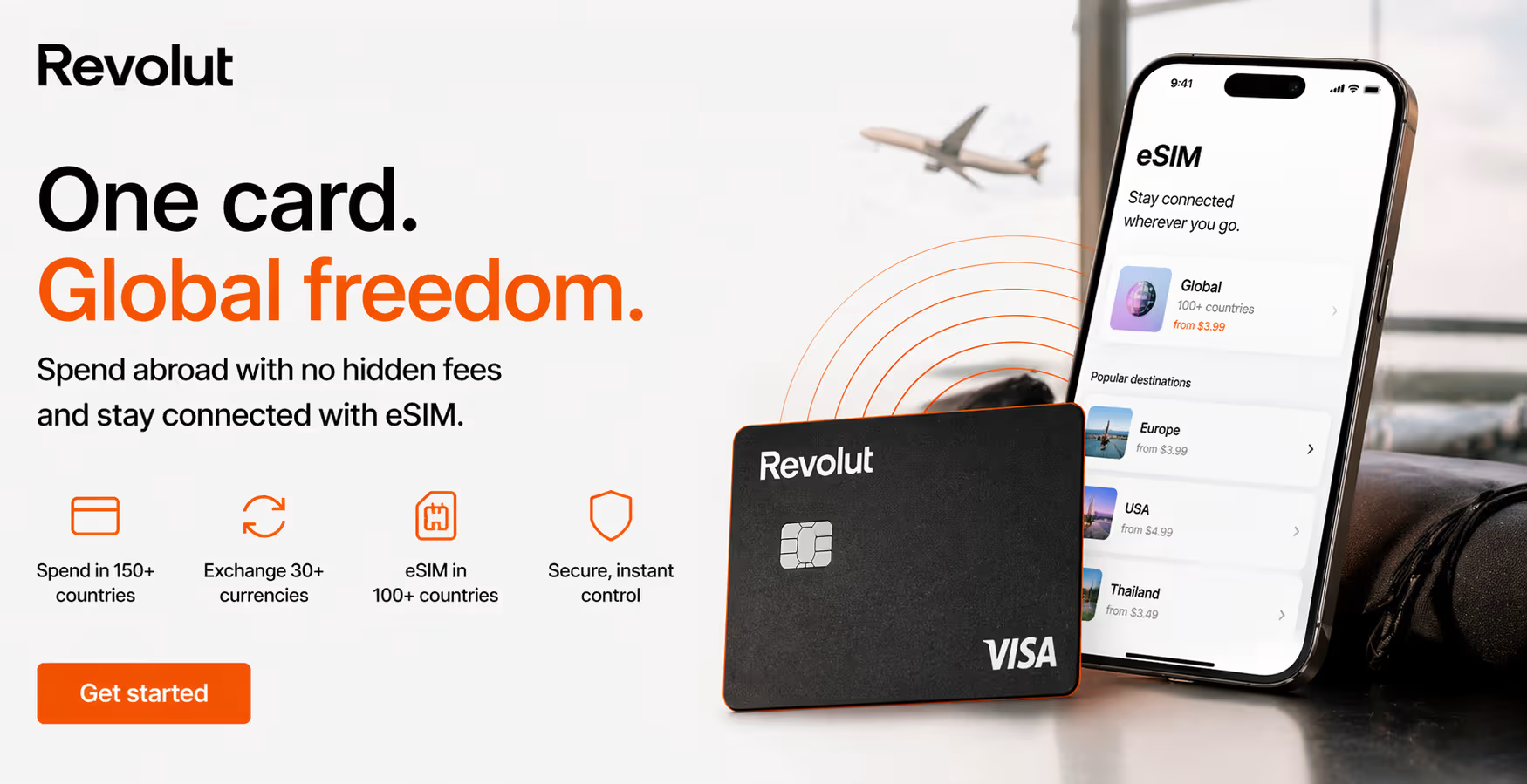
Revolut already combines financial services with travel eSIMs, while Wise offers international payments and eSIM connectivity through its partnership with Gigs. Neither model makes connectivity an exclusively telecom-owned customer relationship anymore.
LemFi’s potential advantage lies elsewhere: its existing relationship with migrant communities and its understanding of financial needs that traditional domestic banking models often overlook.
But there is a meaningful difference between offering several services and solving cross-border financial fragmentation. A UK-only credit product, for instance, does not yet make someone’s credit history portable internationally.
That is where LemFi’s ambition faces its real test.
The more interesting opportunity is not selling customers another data plan or savings account. It is connecting the financial and digital services people need throughout relocation, employment, travel and family life.
If LemFi can achieve that without compromising pricing transparency or product quality, it could become considerably more valuable than a remittance provider.
And for telecom operators, the warning is familiar: another digital platform is finding ways to make connectivity part of a broader customer relationship.


