


FlexiRoam’s Big Four Bank Deal Changes the eSIM Model
Your next travel data plan might already be sitting among your credit card benefits. FlexiRoam’s latest Australian banking deal makes that prospect a little more tangible — and reveals a different way to make money from travel connectivity.
FlexiRoam has signed an onboarding document with an undisclosed Big Four Australian bank and Mastercard, bringing the bank into its Global Data Roaming program. Eligible premium card accounts will receive complimentary overseas data, funded by the issuer.
The interesting part is how FlexiRoam gets paid: an annual fee for every eligible card, regardless of how much data the cardholder uses.
What cardholders actually get
The bank’s identity remains confidential under FlexiRoam’s Mastercard agreements. The disclosed benefit is straightforward:
- One complimentary 3GB global data plan per eligible card account, per calendar year.
- A 15-day validity period across more than 150 countries and regions.
- A 20% discount on additional FlexiRoam data plans.
That coverage should not be confused with FlexiRoam’s wider footprint, which the company describes as more than 190 countries through over 600 carrier partners. The complimentary plan has its own coverage boundaries.
READ MORE: Bcengi Study Finds Median Usage of Just 2GB
For someone taking an occasional overseas trip, 3GB could cover useful essentials: maps, messaging, bookings and banking. Spread across 15 days, though, it averages just 200MB daily. Video calls, streaming and laptop tethering could quickly turn the free allowance into a paid top-up.
Frequent travellers will also notice the annual limit. This is a starter benefit, rather than an ongoing connectivity subscription. Before relying on it, cardholders should check destination coverage, device compatibility and activation conditions.
The fee model matters more
Management’s current planning case puts annual fee revenue at approximately US$140,000, or A$200,000. That is neither revenue guidance nor a guaranteed minimum. It excludes additional data purchases, while future benefits or card portfolios would need separate onboarding.
FY27 will include only a partial year of fees; FY28 is expected to be the first full financial year.
READ MORE: FlexiRoam Signs Telecom MoU to Scale AI eSIM Platform
The program has no fixed term and continues while the bank offers the benefit. There is no minimum card or revenue commitment. Recurring revenue therefore comes with an important qualification: the entitlement must remain in the bank’s proposition.
“Having one of Australia’s Big Four banks offer FlexiRoam data on its premium cards is a milestone for us. It is our model working as designed: the bank funds the benefit, Mastercard is the channel, and FlexiRoam earns a fee on every eligible card,”
said CEO and executive director, Jefrey Ong.
FlexiRoam says the fees are not individually material to group revenue, but its board considers the bank’s participation strategically material.
That distinction makes sense. Winning one bank is modest revenue today; making the model repeatable across issuers is the larger opportunity.
Distribution changes the equation
A standalone eSIM brand has to persuade travellers to find it, trust it and buy from it. Here, the bank already has the customer relationship, while Mastercard provides access to issuing banks.
FlexiRoam reported that its Mastercard benefit reached 418 banks, 1,270 card programs and 78 countries at June 30, 2026. Those figures describe distribution reach; they should not be read as numbers of active travellers or redemptions.
“In our Annual Report we said our first priority for FY27 was converting agreements into deployed recurring revenue. This is that priority delivered,” Ong said.
For competing providers, the implication is practical. Some travellers may start their connectivity search by checking existing benefits before comparing eSIM prices. A bank-funded allowance can capture that first decision, with additional purchases potentially following through the same provider.
READ MORE: Who Owns the Customer in the API Connectivity Era?
FlexiRoam is also extending partner-funded connectivity into travel insurance through Tune Protect and travel loyalty through Dragonpass. The common thread is distribution through organisations that already serve travellers.
Why the timing helps
Australia’s credit card economics changed on October 1, 2026. The Reserve Bank of Australia’s reforms reduced the interchange cap on domestic consumer credit card transactions from 0.8% to 0.3%, alongside changes ending surcharging on designated card networks.
READ MORE: FlexiRoam and Dragonpass Bring eSIM to Hotel Loyalty
The RBA estimates issuer interchange revenue will fall by approximately A$660 million annually, assuming no behavioural changes, with consumer credit card issuers bearing most of the reduction. It expects issuers to review their products, including rewards programs.
“Card economics are changing. We believe issuers will look harder at benefits that cardholders value highly and that are efficient to fund, and that is what we offer,” Ong said.
That is a plausible commercial argument, rather than proof of a coming rush of bank deals. FlexiRoam has not disclosed the per-card fee or enough cost detail to independently assess the benefit’s economics. Lower rewards budgets could encourage cheaper perks, but could also mean fewer perks overall.
Conclusion: the competition starts before checkout
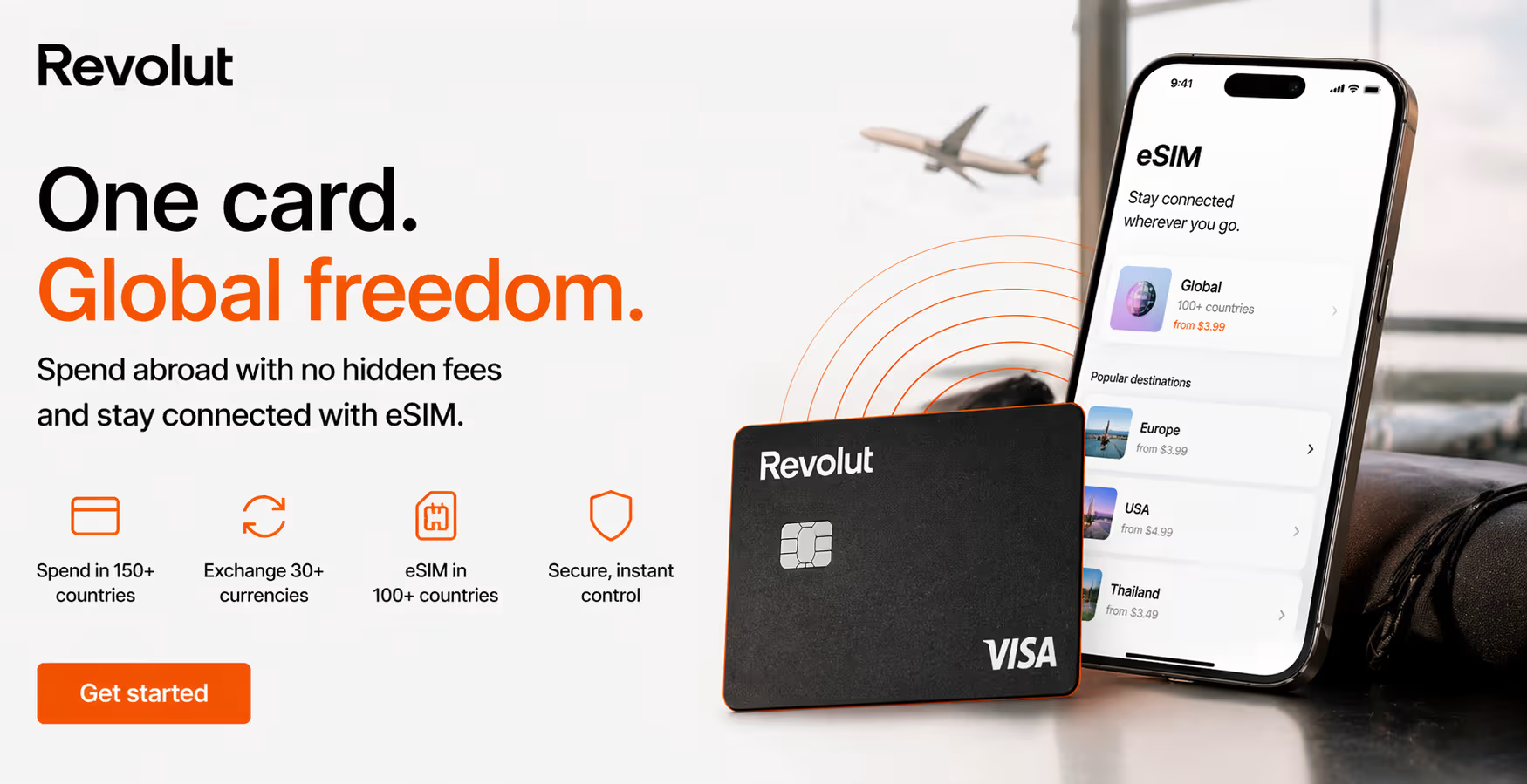
FlexiRoam is joining a market where connectivity increasingly sits inside financial products. Revolut’s 2024 launch with 1GLOBAL embedded eSIM purchasing in its banking app and introduced a monthly 3GB allowance for Ultra customers. Its launch announcement provides a useful comparison: similar connectivity, but a different benefit cadence and customer journey.
For banks considering alternatives, that distinction matters. An annual card entitlement rewards occasional travel; an integrated purchasing experience can serve repeated trips. For travellers, the useful question is whether the included allowance actually matches their habits.
Alertify’s reading is that FlexiRoam’s advantage here lies in securing a funded place inside an existing customer relationship. The next evidence to watch is redemption, repeat purchasing, support quality and issuer retention. A distribution agreement opens the door. A benefit people remember using gives the bank a reason to keep paying.


