Erste Bank George eSIM: The Shift in Travel Data Sales
A traveller checking their bank balance before a flight can now buy mobile data in the same app. That’s the practical appeal of Erste Bank’s new eSIM feature in George. But the more important story is commercial: travel connectivity is moving into apps with established customers, instead of waiting for travellers to visit a telecom website.
The service lets eligible Erste Bank customers purchase and activate data packages covering more than 200 countries and regions without leaving George. Sparkassen customers are expected to follow in the coming weeks. The distinction matters: this is an Austrian launch, not confirmation that eSIMs are already available to George users throughout Europe.
What George’s eSIM actually offers
Customers find the feature under Discover, in the “Let George do it” area. They can select a country-specific, regional or global plan, buy it before travelling and install it on an unlocked, eSIM-compatible phone.
Erste’s announcement highlights several practical features:
- In-app visibility of remaining data and package validity.
- Consumption notifications to help avoid running out unexpectedly.
- Multiple data packages purchased and managed from one account, useful for families.
- Payment initially through Apple Pay or Google Pay, with bank-account debit planned for later.
- Data-only service, leaving calls and SMS on the customer’s existing SIM.
The eSIM feature itself carries no additional bank fee; customers pay for the selected data package, whose price is displayed before purchase. As with most travel eSIMs, an internet connection is needed for installation.
READ MORE: How fintech, neobanks, travel platforms embed connectivity
Max Clary und Aldringen, Erste Bank Austria’s retail banking board member, described the move as making George a stronger digital companion “in everyday life and on trips”. That phrasing says a lot about the bank’s ambition.
George already has a Travel Hub featuring a currency converter, destination information and overseas card-management tools. Connectivity joins that collection as another service linked to the moment someone leaves home.
The company behind the service is Pago
The eSIM isn’t operated by Erste as a mobile network. Erste’s own customer information identifies Pago as the external service provider, and says the eSIM purchase contract is concluded with Pago. Erste and the Sparkassen act as intermediaries.
Pago is a Romanian-founded fintech launched in 2017, better known for household bill payments, insurance and other everyday financial transactions. Its technology is already integrated into partner applications, including George in Romania for bill management. It also sells travel eSIMs through its own app, where it advertises more than 10,000 activations.
READ MORE: The Invisible Platforms Powering the eSIM Market
This is precisely why the relationship is interesting. Pago is not simply a logo on a telecom product. It is a services intermediary with experience embedding products into financial apps.
One important detail remains unconfirmed publicly: which wholesale eSIM platform or network partners supply the connectivity behind Pago’s offer. Identifying Pago as the provider does not establish who operates the upstream telecom infrastructure.
Eleven million users change the distribution equation
According to Erste Group’s 2025 annual reporting, George had more than 11.4 million users at the end of 2025. In Austria, the platform had around 2.6 million users.
Those figures should not be confused with immediate eSIM availability or expected sales. Still, they explain why this launch deserves attention.
READ MORE: Why Some eSIM Providers Win Distribution While Others Compete on Price
A conventional eSIM seller has to persuade a traveller to discover the brand, compare packages, trust its checkout and install another app. George can put a relevant offer inside a familiar banking environment, alongside other travel services.
The difference is not necessarily better coverage or lower prices. It is distribution at the point of need.
For specialised travel eSIM brands, that raises an uncomfortable question: how much will customer acquisition cost when banking and travel apps can present connectivity before the traveller even starts searching?

Banks are no longer watching from the sidelines
Erste is not the first financial platform to recognise the opportunity.
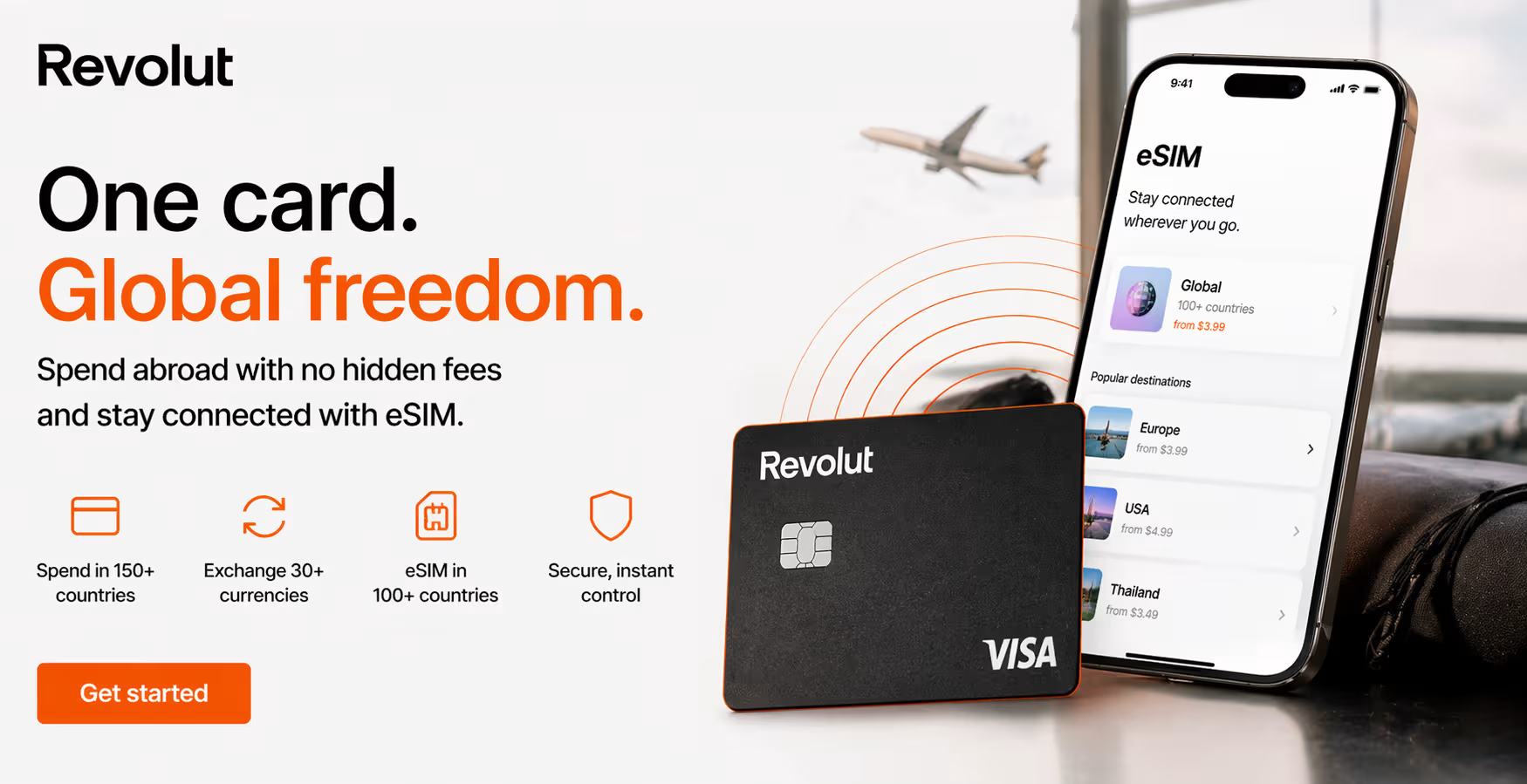
Revolut already sells travel eSIMs inside its app through a partnership with 1GLOBAL. The relationship has also expanded into domestic mobile services, showing how travel eSIM can be a starting point rather than the final product. Its 2024 annual report says 600,000 customers purchased an eSIM plan that year—evidence that this can become a meaningful product category, not just an experimental app tile.
bunq offers in-app travel eSIMs and includes data allowances with its Elite membership. N26 also offers travel eSIM packages through its banking app. The models differ, but the direction is remarkably consistent: financial platforms are extending their relevance from payments into the practical logistics of travel.
READ MORE: Why Embedded Connectivity Threatens Telecom Distribution?
There is even a revealing contrast inside Erste Group. Erste Bank Polska offers an eSIM through a separate arrangement involving Fonia Telecom and Autopay, rather than the Austrian George/Pago setup. One banking group can therefore use different connectivity partnerships in different markets.
None of this means independent eSIM retailers are finished. Airalo, Nomad eSIM, Saily and others can still compete on choice, transparent comparisons, promotions, customer support and specialist travel features. But they are increasingly competing against the convenience of an app customers have already installed.
Convenience is not the same as the best deal
There are reasons not to buy automatically from George. The service requires a compatible, unlocked device and an eligible bank account. Data-only packages won’t replace a full mobile plan with a local phone number.
Travellers should also check whether their existing operator already provides suitable roaming. Within the EU, roaming-at-home rules often make a second data plan unnecessary, subject to fair-use limits. For destinations such as Switzerland, Türkiye or the United States, an eSIM may be more attractive—but pricing, supported networks, data limits and validity still deserve comparison.
Erste publishes the purchasing flow, but not a universally comparable tariff table for every destination. More visible information about local networks, connection quality and who handles technical problems would make an embedded offer easier to assess against standalone providers.
Conclusion: the storefront may matter more than the SIM
The most consequential part of the George launch is not the technology. eSIM activation is increasingly routine. What is changing is who gets to offer it first.
In Erste’s arrangement, the bank has the established customer relationship and app interface, Pago is the contracted eSIM provider, and telecom partners deliver network access. Each has a role, but the customer’s shopping journey begins with George.
Revolut’s experience suggests there is real commercial potential in that arrangement. And for hotels, airlines, insurers and booking platforms, the lesson is just as relevant: a brand does not have to become a mobile operator to sell useful connectivity.
For telecom operators and independent eSIM companies, the strategic challenge is sharper. Winning on data price alone may no longer be enough; they will need either a compelling direct customer proposition or a place inside someone else’s distribution ecosystem.
Travel eSIM is becoming less about finding an eSIM shop—and more about which trusted app gets there first.