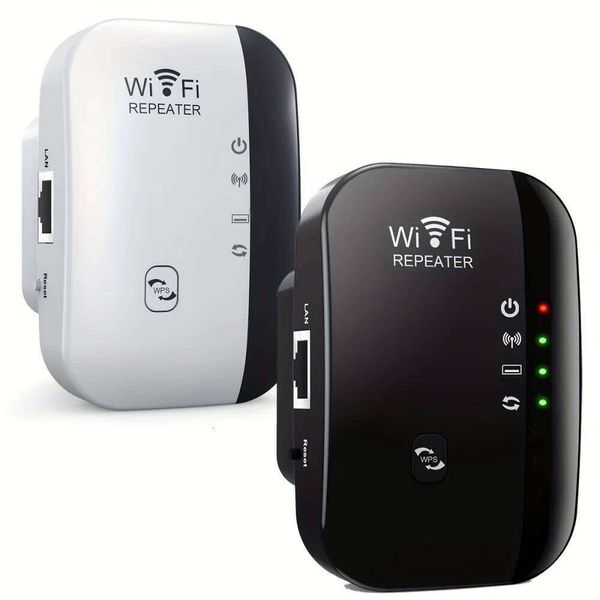
Aditum Carrier Connect Turns Wi-Fi Into Mobile Coverage
The company has launched Carrier Connect, an addition to its Wi-Fi Traverse system that lets participating mobile subscribers connect automatically over a building’s existing broadband infrastructure. It has also upgraded its Connect management portal with tools for network monitoring, capacity planning and billing analysis.
For apartment operators, the pitch is straightforward: make infrastructure already serving tenants do more work. But the bigger story is the growing overlap between Wi-Fi, mobile networks and property-owned internet services.
Mobile Access Without Another Login
Carrier Connect uses Passpoint, a standard that allows compatible devices to discover and authenticate to eligible Wi-Fi networks with existing credentials. A resident whose mobile provider is enabled at the property can connect without entering a password or visiting a captive portal.
The service runs through Aditum Zero Touch AX routers, which also deliver tenant broadband with speeds of up to 1 Gbps upload and download. Carrier traffic uses a separate, secure Wi-Fi network rather than entering residents’ private home networks.
READ MORE: WBA Industry Report 2025: Wi-Fi Investment Soars with OpenRoaming and Next-Gen Technologies
According to Aditum, participating networks include:
-
AT&T and AT&T FirstNet, extending the option to eligible public-safety subscribers.
-
T-Mobile, alongside MVNO brands including Mint Mobile and Google Fi.
-
Verizon, whose support is targeted for late 2026 or early 2027, not available at launch.
Carrier activation can require property-level checks involving E911 location information and potential service conflicts. That detail matters: automatic authentication is convenient, but emergency-call handling cannot be treated as an afterthought.
READ MORE: Push-to-Talk Devices, eSIM Data and the New Shape of Team Connectivity
Carrier Connect is available at properties equipped with Zero Touch AX routers. Buildings still using older AC models can introduce AX equipment progressively, without replacing everything at once.
Why Property Owners Might Care
Poor indoor reception is especially frustrating in buildings with concrete, metal structures or energy-efficient glazing. Traditional remedies include distributed antenna systems (DAS) and small cells, but those solutions can involve dedicated equipment, carrier coordination and significant installation work.
Aditum’s proposition is different. If a property already has well-placed, managed Wi-Fi equipment, it may be able to improve mobile connectivity without building an entirely separate system.
READ MORE: Luxury and technology come together in the new Milanese project by the Lungarno Collection, thanks to INWIT’s innovation
That does not make Wi-Fi a universal substitute for cellular coverage. Performance will depend on access-point placement, backhaul capacity, compatible handsets and carrier participation. Nor should FirstNet compatibility be confused with a certified emergency-responder radio coverage system. Larger venues or properties with strict public-safety requirements may still need DAS or specialized radio infrastructure.
The Less Visible Upgrade
Alongside Carrier Connect, Aditum expanded its Connect portal. The changes may be less eye-catching, but they tackle everyday challenges for companies operating broadband across multiple residential properties:
- Operational dashboards flag unusual reconnections, latency shifts, service availability and wide-area-network pressure.
- A bandwidth dashboard compares dedicated internet access capacity with subscriber counts and advertised packages, using observed 95th-percentile utilization and what-if modelling.
- Optional Direct Tenant Billing analytics show recurring revenue, collections, overdue accounts and revenue per subscriber, including payment patterns at tenant level.
These are practical tools for deciding where to upgrade upstream fiber, investigating poor performance or addressing billing problems before they spread across a portfolio.
Brian Higgins, Aditum Connect’s founder and CEO, said:
“Our goal has always been to give property owners and their technology partners purpose-built tools to operate an ISP in a multi-tenant setting, without having to build all the systems a quality ISP requires from scratch. Carrier Connect extends what that infrastructure can do, while Connect’s new intelligence gives operators a clearer view of network performance, capacity needs and business performance.”
Aditum says its technology is deployed across more than 20 US states, following nearly 12 years of continuous operation.
Conclusion: Convergence Needs a Business Case
Aditum is entering territory already served by in-building specialists such as Boingo Wireless, which offers managed Wi-Fi alongside DAS, small cells and private 5G. The distinction is architectural: Aditum is emphasizing reuse of residential broadband routers rather than installing dedicated cellular coverage equipment.
The Wireless Broadband Alliance’s Passpoint-based OpenRoaming work points in the same direction: credentials and network relationships should increasingly make connectivity automatic rather than something users manually configure. Carrier Connect is a carrier-enabled application of that broader idea, not necessarily an OpenRoaming deployment.
What remains unproven publicly is the economics. Property owners need measured coverage improvements, real-world handoff performance, transparent carrier availability and cost comparisons with alternatives. Without those, the savings argument is promising but not quantified.
The more interesting shift is who controls the indoor connection. Buildings are becoming connectivity platforms in their own right. The winners will not simply offer more bars on a phone; they will make that connectivity dependable, manageable and financially sensible.