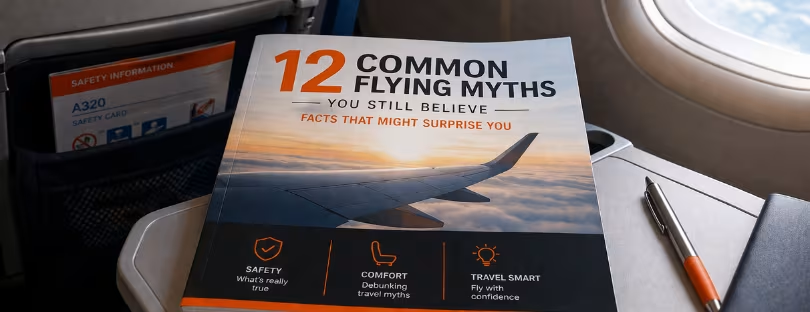
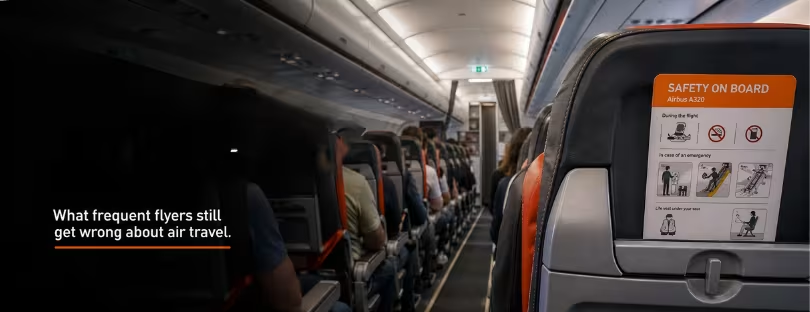
But here’s the uncomfortable truth: a lot of what we think we know about flying simply isn’t true.
Some myths are harmless. Others quietly shape how safe or anxious you feel once the doors close.
Let’s break a few of them.
Myth #1: You can open the plane door mid-flight
Fact: You can’t. Not even close. At cruising altitude, the pressure difference between the cabin and the outside air is so extreme that opening a door is physically impossible. It’s not about strength. It’s about physics. Even the crew couldn’t do it if they tried.
Myth #2: Alcohol hits harder in the air
Fact: Not exactly, but it feels like it does. Alcohol doesn’t become stronger at altitude, but cabin pressure and low humidity can make you feel its effects faster. Add dehydration into the mix, and one drink can feel like two. That’s why staying hydrated matters more than usual.
Myth #3: Cabin air is full of germs
Fact: It’s cleaner than most indoor spaces. Modern aircraft use HEPA filters that remove up to 99.9% of airborne particles, including bacteria and viruses. The air is refreshed frequently, often every few minutes. The real risk isn’t the air. It’s the surfaces.
Myth #4: Devices must be off during takeoff and landing
Fact: That rule is outdated. Today, you can keep devices on in airplane mode throughout the flight. The old concern about interference is no longer relevant for modern aircraft systems.
Myth #5: The back of the plane is safest
Fact: There’s no clear “safest” seat. Some studies suggest slight variations in survival rates, but there’s no definitive answer. What matters more is proximity to exits and how quickly you can respond in an emergency.
Myth #6: Oxygen masks are for crashes
Fact: They’re for loss of cabin pressure. If cabin pressure drops, oxygen levels fall quickly. Masks deploy to give you enough oxygen to stay conscious while the aircraft descends to a safe altitude.
Myth #7: Flight attendants are just service staff
Fact: Safety comes first. Always. Cabin crew is trained for emergencies, medical situations, evacuations, and crisis management. Service is just one part of the job. Safety is the priority.
Myth #8: You shouldn’t flush the toilet on the ground
Fact: You can. Aircraft toilets use vacuum systems designed to work both on the ground and in the air. There’s no need to wait, and no risk of damaging anything by flushing before takeoff.
Myth #9: The pilot flies the entire time
Fact: Autopilot does a lot of the work. Modern aircraft rely heavily on autopilot during cruise. But pilots are constantly monitoring systems and are fully in control during critical phases like takeoff and landing.
Myth #10: Wings “flap” during turbulence
Fact: They flex by design. Aircraft wings are engineered to bend and absorb stress. What looks dramatic from the window is actually a sign that the aircraft is doing exactly what it’s supposed to do.
Myth #11: Smaller planes are less safe
Fact: Size isn’t the deciding factor. Safety depends more on maintenance, regulations, and pilot training than on aircraft size. Commercial aviation, whether large or small, operates under strict safety standards.
Myth #12: Babies born on planes fly free for life
Fact: Almost never. There are a few rare cases where airlines have offered lifetime perks, but it’s the exception, not the rule. Most airlines don’t offer anything beyond standard policies.
Final thoughts
Flying feels routine today, but it remains one of the most misunderstood parts of travel.
A lot of the anxiety people carry on board doesn’t come from real risk. It comes from outdated ideas, movie scenes, and things repeated often enough to sound true.
Once you separate fact from fiction, something shifts.
You stop overthinking turbulence. You understand what’s actually happening around you. And the whole experience becomes… calmer.
That’s the difference.
Not just flying often, but actually understanding how flying works.
Driven by wanderlust and a passion for tech, Sandra is the creative force behind Alertify. Love for exploration and discovery is what sparked the idea for Alertify, a product that likely combines Sandra’s technological expertise with the desire to simplify or enhance travel experiences in some way.